Calming & Evening
Chamomile Tea
A gentle, apple-sweet floral infusion and the classic wind-down cup — how to brew it, taste it and store it well.
Welcome to HerbalBrewGuides.one — a calm, independent library of science-aware herbal tea education. Learn what's really in your cup, how to brew each botanical at its best, and how centuries of tea traditions still shape the way we steep today.
Clear, balanced learning — never medical advice, hype or unproven health promises.
Traditional context is separated from evidence, and claims are kept measured and honest.
Plain-English guides, charts and tools that make your first cup as easy as your hundredth.
We're a small editorial team of tea lovers — we brew, test and write everything ourselves.
HerbalBrewGuides.one exists for one simple reason: most of us were handed a box of tea bags and never actually taught how to brew, taste or understand what we were drinking.
We're changing that with a growing library of botanical guides, brewing resources and hands-on tools — all written in plain language, all grounded in a science-aware view of what herbs can and can't do.
You won't find "miracle detox" claims here. Instead, you'll find honest explanations of flavour, tradition and technique, so you can steep a genuinely better cup and enjoy the ritual with confidence.
Everything is created and reviewed by our editorial team and cross-checked against reputable sources, following our editorial and fact-checking policies.
More about our missionLet's start with the most useful piece of vocabulary you'll ever learn as a tea drinker.
A "herbal tea" is really a tisane — an infusion of plant material in hot water that contains no leaves from the true tea plant, Camellia sinensis. When you steep chamomile flowers, peppermint leaves or ginger root, you're making a tisane.
That single distinction explains almost everything that makes herbal teas special. Because they don't use the tea plant, the great majority are naturally caffeine-free, which is why they're such popular evening and all-day drinks.
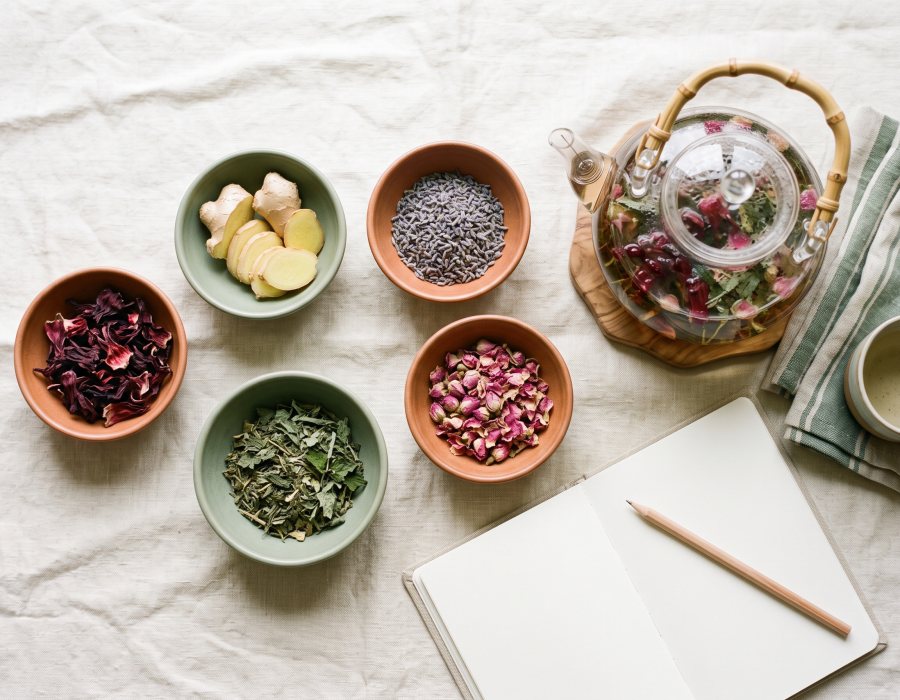
Herbal teas can be made from an enormous range of botanicals: delicate flowers like rose and elderflower, aromatic leaves like mint and lemon balm, warming roots like ginger and turmeric, sweet seeds like fennel, and tangy fruits like hibiscus and rosehip.
Each of those plant parts behaves differently in water — and learning those differences is the difference between a thin, forgettable cup and a fragrant, balanced one. That's what the rest of this site is here to teach.
There's more than one way to get flavour out of a plant. The method you choose should match the botanical.
An infusion simply steeps a botanical in hot water. It's the right method for delicate materials — leaves, flowers and light seeds — that release their aroma quickly.
Pour hot water over the herb, cover the vessel so the fragrant oils don't escape as steam, and let it sit for the recommended time. Covering matters more than most people realise.
A decoction gently simmers a botanical in water. It's the right method for dense materials — roots, barks and hard seeds — that need heat and time to give up their flavour.
Ginger, turmeric, cinnamon bark and dandelion root all reward a short simmer. Learn the full technique in our Botanical Brewing Guide.
Steeping hibiscus, mint or lemongrass in cold water for 4–12 hours in the fridge gives a smoother, less tart, beautifully refreshing result — perfect for summer.
"If a cup tastes weak, people add more time and make it bitter. Nine times out of ten the real fix is more herb, not more minutes."
A lid or saucer keeps aromatic compounds in the cup instead of drifting off in the steam. It's the simplest upgrade in all of tea.
They share a mug and a ritual, but true tea and herbal tea are botanically different drinks.
| Feature | True tea | Herbal tea (tisane) |
|---|---|---|
| Plant source | Camellia sinensis | Any other botanical |
| Examples | Green, black, oolong, white | Chamomile, peppermint, rooibos, ginger |
| Caffeine | Yes (varies by type) | Usually none |
| Typical temp | 70–95°C | 90–100°C |
| Typical steep | 1–4 minutes | 5–10 minutes |
| Bitterness risk | High if over-steeped | Low to moderate |
| Best for evenings | Not ideal | Excellent |
Want the deep dive? Read Green Tea vs Herbal Tea.
Humans have been steeping plants for as long as we've had fire and pots. Here's the very short version.
From Egyptian karkadé (hibiscus) to Chinese and Ayurvedic herbal traditions, early cultures brewed botanicals for flavour, ceremony and folk wellness.
Greek and Roman scholars catalogued hundreds of plants. Their "herbals" became reference books copied and expanded for over a thousand years.
European monasteries kept physic gardens of mint, sage, fennel and chamomile, preserving brewing knowledge through the centuries.
Global trade routes spread rooibos, spices and new flowers, blending regional traditions into the diverse tisane cultures we enjoy today.
Herbal teas are now a global everyday pleasure — and, happily, better understood than ever. Explore the full story in our history guide.
Nearly every culture has a signature infusion. Here are a handful worth knowing.
Tart, ruby hibiscus served hot in winter and iced in summer, often at celebrations.
The smooth, naturally sweet red bush, grown only in the Cederberg region and loved worldwide.
Holy basil, revered in Ayurveda and sipped as a fragrant, clove-like daily infusion.
Fresh spearmint, traditionally with green tea and sugar, poured high for a frothy top.
High-altitude mountain herbs brewed as warming, aromatic everyday infusions.
Gentle floral infusions long associated with calm evenings and cottage gardens.
Meet the botanicals you'll reach for most. Tap any to open its full guide.
Calming · Floral · Before bed
Refreshing · Minty · After meals
Warming · Spiced · Zingy
Tart · Floral · Iced
Smooth · Everyday · Naturally sweet
Floral · Calming · Aromatic
Citrusy · Refreshing · Bright
Golden · Earthy · Warming
Great herbal tea comes down to four adjustable levers. Master these and you can brew anything.
Start with fresh, filtered water. Flavour is 99% water, so soft, clean water genuinely tastes better in the cup.
Match heat to the botanical: near-boiling for roots and hibiscus, a touch cooler for delicate flowers.
Use enough herb — roughly 1 heaped teaspoon (2–3g) per cup for leaves and flowers, more for fluffy blossoms.
Give botanicals 5–10 minutes. Keep the vessel covered, then taste and stop when it's right for you.
Keep this handy chart nearby, or let our calculators do the maths for you.
| Botanical type | °C | °F |
|---|---|---|
| Delicate flowers (rose, lavender) | 85–90 | 185–194 |
| Leaves (mint, lemon balm) | 95–100 | 203–212 |
| Fruits & hibiscus | 100 | 212 |
| Roots & bark (ginger, cinnamon) | 100 (simmer) | 212 |
| Seeds (fennel, anise) | 100 | 212 |
| Botanical type | Steep | Note |
|---|---|---|
| Delicate flowers | 3–4 min | Stop early to avoid soapiness |
| Leaves | 5–7 min | Cover to trap aroma |
| Fruits & hibiscus | 6–8 min | Longer = more tart |
| Roots & bark | 8–12 min | Simmer, don't just steep |
| Seeds | 7–10 min | Crush lightly first |
Loose leaf usually delivers more flavour and aroma, because whole and large-cut botanicals have room to expand and release their oils.
Tea bags win on convenience and consistency — and modern pyramid bags close much of the flavour gap. Neither is "wrong"; they simply suit different moments.
Cost, waste and control all factor in too. We break down every angle, with a clear verdict for different drinkers, in our dedicated guide.
Read the full comparisonMost herbal teas sit within six broad flavour families. Learning them makes tasting — and blending — far easier.
One of the quiet joys of herbal tea is that you can enjoy it late in the evening without a second thought. Chamomile, rooibos, lemon balm and peppermint are all naturally caffeine-free.
That makes tisanes a wonderful way to stay hydrated and keep a comforting ritual going all day — from a zingy morning ginger-lemongrass cup to a soft lavender infusion before bed.
If you're cutting back on caffeine, our Caffeine-Free Finder helps you swap confidently, and our caffeine-free ideas keep things interesting.
Long before "wellness" was a buzzword, people used a warm cup as a daily pause — a small ceremony that signals the day is starting, slowing or ending.
We celebrate that ritual honestly: a mindful brew can genuinely help you unwind, without needing to promise it cures anything. The comfort is real; the claims stay modest.
Build your own gentle routine with our Daily Tea Planner and the ideas in small herbal tea rituals.
A gentle reminder: everything here is educational. Herbal teas are food and drink, not medicine — we describe traditional and science-aware context, never treatment. See our full disclaimer.
Our recurring spotlight zooms in on one botanical. First up, the world's favourite calming flower.
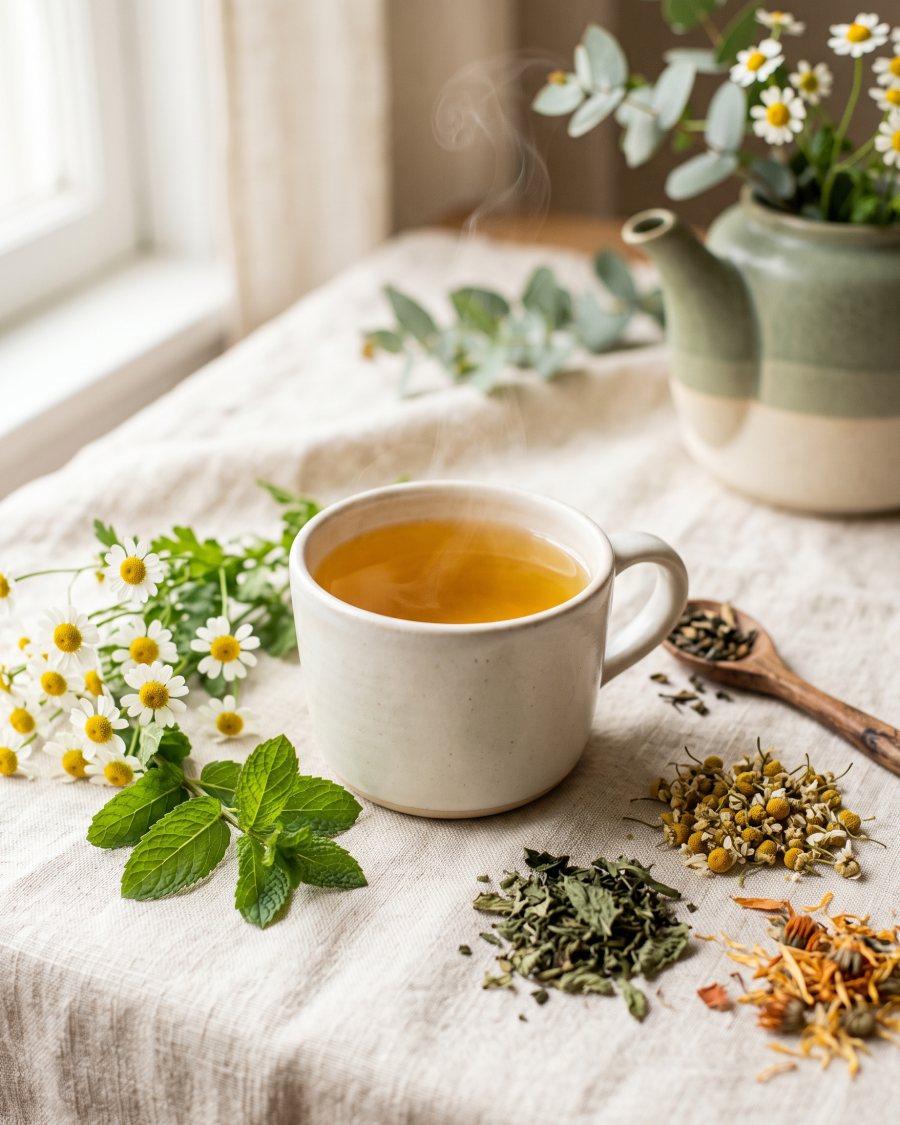
Chamomile's tiny daisy-like flowers give a gentle, apple-sweet infusion with a soft golden colour. It's the classic bedtime cup for good reason — soothing to sip and beautifully forgiving to brew.
Steep a heaped tablespoon of dried flowers in water just off the boil for about five minutes, covered. Add a touch of honey if you like, and never let it stew into bitterness.
A better cup starts before you brew. Here's how to buy quality, keep it fresh and source it thoughtfully.
Look for vivid colour, a strong aroma and whole or large-cut pieces rather than dust. Fragrance is your best quality signal — if it smells faint in the packet, it'll taste faint in the cup.
Buying guideKeep herbs in airtight tins away from light, heat and moisture. Whole botanicals stay lively for 12–24 months; cut and sifted herbs fade faster. Never store above the stove.
Storage guideYou need surprisingly little: a kettle, a roomy infuser or a teapot, and a way to time your steep. We'll tell you what's worth buying and what to skip.
Equipment guideThoughtful buying — organic where it counts, minimal packaging and fair supply chains — is better for growers and the planet, and often for flavour too.
Sourcing guideWe love herbal tea — which is exactly why we keep the claims honest. A few myths worth retiring:
Your liver and kidneys handle detoxification. No tea is required — and "detox" claims are marketing, not science.
A warm, caffeine-free drink can support a mindful routine, but no infusion melts fat on its own.
Some herbs interact with medication or aren't ideal in pregnancy. Natural still means "use sensibly".
New to all this? Follow these four steps in order and you'll be brewing confidently in a week.
Read the beginner's guide to understand tisanes, caffeine and plant parts.
Work through brewing basics and the temperature and time charts above.
Use the Herbal Tea Finder to discover botanicals you'll actually love.
Keep notes in the Tea Journal and take the free brewing course.
In-depth, beginner-friendly guides to the botanicals people ask about most.
A gentle, apple-sweet floral infusion and the classic wind-down cup — how to brew it, taste it and store it well.
Cool, brisk and instantly refreshing — a caffeine-free after-dinner classic with a big menthol lift.
Warming, peppery and bright — how to brew fresh or dried ginger root for a lively, comforting cup.
Ruby-red, tart and cranberry-bright — a stunning hot or iced infusion from dried hibiscus calyces.
South Africa's smooth, naturally sweet red bush — a versatile, caffeine-free base for everyday drinking.
Clove-like, peppery and aromatic — the revered herb of Ayurveda explored from a science-aware angle.
Free, private, browser-based tools that take the guesswork out of brewing.
Enter your cups and strength; get an exact herb weight, water volume, temperature and steeping time.
Dial in grams of herb per millilitre of water for any pot or mug size, from a single cup to a party urn.
Answer a few quick questions about taste and moment, and get matched to herbal teas worth trying.
Preset steeping timers for popular herbs, with a gentle alert so you never over-steep into bitterness.
Map calming, refreshing and warming cups across your day for a balanced, caffeine-free routine.
Keep private tasting notes, ratings and brew settings for every tea — saved right in your browser.
Explore herbal teas by the mood and moment you're brewing for.
Soft, soothing infusions traditionally sipped to wind down — chamomile, lavender, lemon balm and gentle bedtime blends.
4 guidesAfter-meal favourites and settling botanicals such as peppermint, fennel, ginger and licorice root.
6 guidesBright, cooling and cheerful — spearmint, lemongrass, hibiscus and vibrant iced-tea botanicals.
5 guidesCosy, aromatic and warming infusions built around ginger, cinnamon, turmeric and baking-spice blends.
4 guidesFragrant petals and blossoms — rose, hibiscus, jasmine, elderflower and butterfly pea flower.
7 guidesTraditionally popular botanicals like echinacea, elderflower, rosehip and tulsi — explored for learning, not treatment.
7 guidesNaturally caffeine-free daily sippers such as rooibos, nettle, moringa and dandelion for everyday rituals.
9 guidesThe how-to backbone of the site: temperatures, steeping times, storage, equipment, flavour and myth-busting.
13 guidesFresh, science-aware reads on brewing, botanicals and everyday tea culture.
Our single, everything-in-one-place reference — bookmark it and brew your way through.
"Detox teas", fat-burning claims and cure-all promises get a calm, evidence-informed reality check.
Boiling everything, over-steeping, weak ratios and stale herbs — the small errors that flatten your cup.
The essentials newcomers ask us most — with links to go deeper.
A herbal tea (more precisely a tisane) is an infusion made by steeping plant material — leaves, flowers, seeds, roots, bark or fruit — in hot water. Unlike green, black or oolong tea, it usually contains no leaves from the Camellia sinensis plant, which means most herbal teas are naturally caffeine-free.
You can read the full explanation in our beginner's guide.
The vast majority are. Chamomile, peppermint, rooibos, hibiscus and ginger contain no caffeine. A few blends add green tea or yerba mate, so always check the label. Our Caffeine-Free Finder helps you confirm.
No. Everything here is educational. We describe traditional uses and science-aware context, but we do not diagnose, treat or make health claims. Please see our Medical Disclaimer and speak with a qualified professional about your health.
Most robust herbs (roots, seeds, hibiscus) love near-boiling water at 95–100°C, while delicate flowers such as lavender and rose prefer around 90°C. Our Temperature Guide and Temperature Calculator make it simple.
Typically 5–10 minutes — longer than true tea, because botanicals release flavour more slowly. Flowers need less time; roots and barks need more. Use our Brewing Timer for per-herb presets.
Both work. Loose leaf usually gives more flavour and lets you control the blend; quality bags are convenient and consistent. We compare them honestly in Loose Leaf vs Tea Bags.
A few kind words from the tea drinkers who brew along with us.
I finally understand why my chamomile always tasted flat — I was under-dosing it. The charts here fixed my evening cup overnight.
Refreshingly honest. No "detox" nonsense, just clear explanations and genuinely useful tools. It's my go-to tea reference now.
The brewing calculator and timer are brilliant. I've stopped over-steeping and my herbal blends taste so much smoother.
Pick a guide, run a quick calculation, or take the free brewing course. Everything on HerbalBrewGuides.one is free and made for curious tea drinkers.
We're a small, friendly team and we read everything. Whether you've spotted an error, want a botanical covered, or just fancy a chat about tea — get in touch.